ActEU Final Conference 05 February 2026, Brussels
“Detached, Distrustful, Disengaged? Rethinking democracy in today’s Europe”

Report by Eva Ribera
On 5 February 2026, the Trans European Policy Studies Association (TEPSA) organised the Final Conference of the Horizon Europe ActEU project (Activating European Citizens’ Trust in Times of Crises and Polarisation), titled “Detached, Distrustful, Disengaged? Rethinking democracy in today’s Europe”. The conference brought together more than 270 participants, including 143 attending in person, to situate ActEU’s final research findings within a broader exchange with EU policy-makers and practitioners on democratic crisis, resilience, and renewal.
Opening remarks
In his opening remarks, ActEU Coordinator Michael Kaeding (University of Duisburg-Essen) welcomed participants and emphasised the timeliness of discussing the state of democracy. He highlighted that the project was never designed to operate in isolation, but in coordination with other Horizon Europe sister and cousin projects, with whom preliminary findings had already been exchanged in an internal meeting the day before.
The speaker gave particular attention to the project’s outreach dimension. Alongside 17 Youth Democracy Labs across Europe engaging more than 350 students, ActEU produced outputs beyond traditional academic publications, such as political cartoons, animated explainers, infographics, and multilingual materials, so that the project’s findings could be communicated in accessible, relatable language to the wider public. The welcoming speech concluded by presenting the conference as an opportunity to reflect on ActEU’s findings for tackling pressing issues of declining trust, frustration, disengagement, reduced compliance, and growing doubts about democracy.
Keynote speech – What kind of democracy do we need in an unstable world?
Moderated by Ann-Kathrin Reinl (GESIS Leibniz Institute for the Social Sciences & ActEU Scientific Advisor), the keynote speech addressed a question: What kind of democracy do we need in an unstable world?
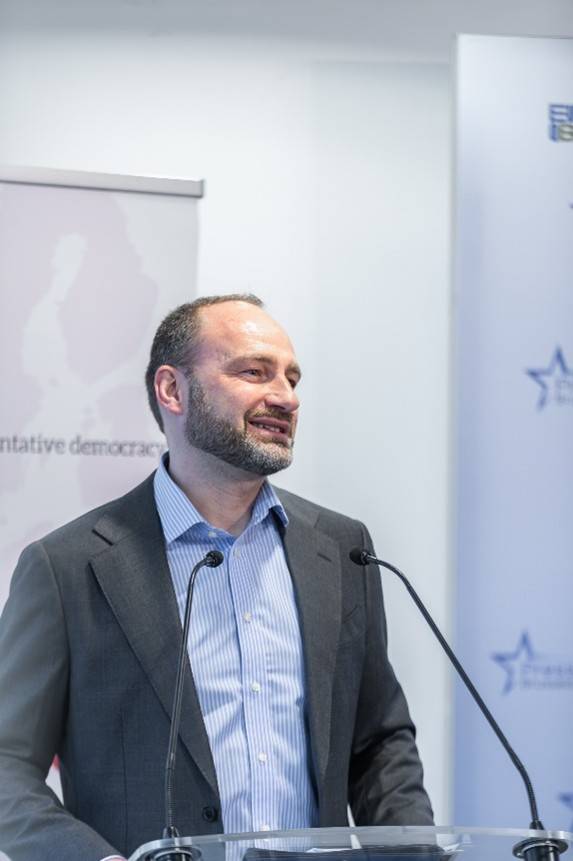
André Sobczak, Secretary General of Eurocities, started with underlining a worrying trend of growing friction between national governments and outspoken municipal leaders. He mentioned the examples of Budapest and Istanbul as particularly illustrative, where elected mayors found themselves under sustained pressure and even imprisonment (in the case of Turkey) after challenging national authorities.
This appears to be linked to proximity, as trust on the local level is more tangible because citizens can directly assess the delivery of politicians’ promises, which allows mayors to accumulate credibility that national governments often lack. Overall, trust-building participatory processes therefore require structure and concreteness. Drawing on local deliberative experiments, Sobczak identified three conditions as essential:
- Citizens must know clearly what is open to debate and what is not. Certain conditions such as basic European values are non-negotiable.
- Deliberation must be grounded in providing basic information to the public first.
- Outcomes must be visibly implemented. There has to be transparency about how the proposals will lead to actions.
Online harassment of politicians and the decline of local journalism were identified as factors weakening public debate and increasing polarisation. In this context, Sobczak underlined the need for defending the conditions under which democratic discussion can take place: “It is worrying that people still think that it’s up to the national governments to decide their own democratic system. I think there are some principles that we all have to defend together.”
Nevertheless, the keynote ended on positive developments: youth mobilisation in contexts where freedoms are restricted is evidence that democratic commitment persists. When citizens perceive democracy to be genuinely endangered, they respond. The institutions, therefore, do not need to think of innovative ways to foster participation from scratch, but to ensure that existing practices have constructive channels.
Session 1: Can we still trust democracy?
The first panel addressed the question “Can we still trust democracy?” and was moderated by Alexander Hartland (University of Saarland). Before introducing the panellists, he invited the audience to take part in a short real-time survey. The exercise aimed to capture initial perceptions in the room. Audience was asked four questions relating to:
- Levels of trust in national government
- Levels of trust in the EU
- Overall satisfaction with democracy
- Expectations about the future of democracy
While not representative, the results provided an immediate snapshot of the audience’s perceptions. They suggested relatively high trust in EU institutions, slightly lower trust in national governments, mid-range democratic satisfaction, and a more pessimistic outlook regarding democratic prospects.
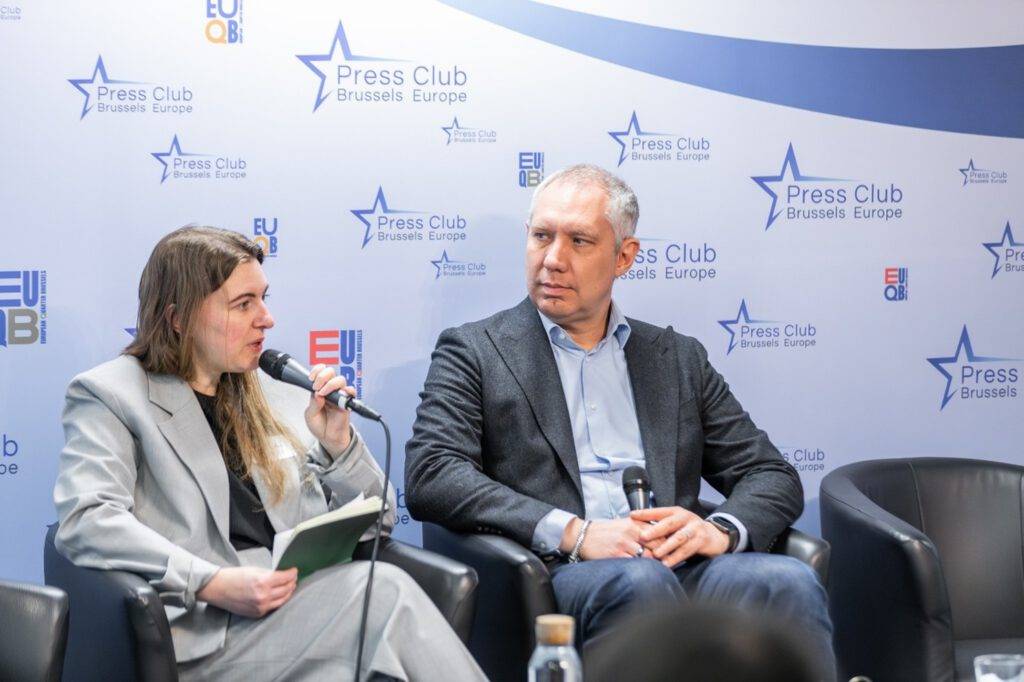
Sofie Marien (KU Leuven & ActEU Scientific Advisory Board) began by challenging the widespread narrative that trust in democracy is in its historic decline. Trust, she argued, is not declining everywhere nor at historic lows, yet dissatisfaction with democratic performance is real and consequential. She emphasised that trust is closely linked to trustworthiness, and therefore, responsibility lies primarily with acting in ways that merit citizens’ confidence. Marien highlighted two priorities: (i) “reclaiming democracy” as more than elections and majority rule by reaffirming the role of rule of law, pluralism and minority protection; and (ii) “reclaiming the internet” through stronger regulation and better-designed digital tools that support informed participation. She concluded that democratic confidence could improve if these foundations are strengthened.
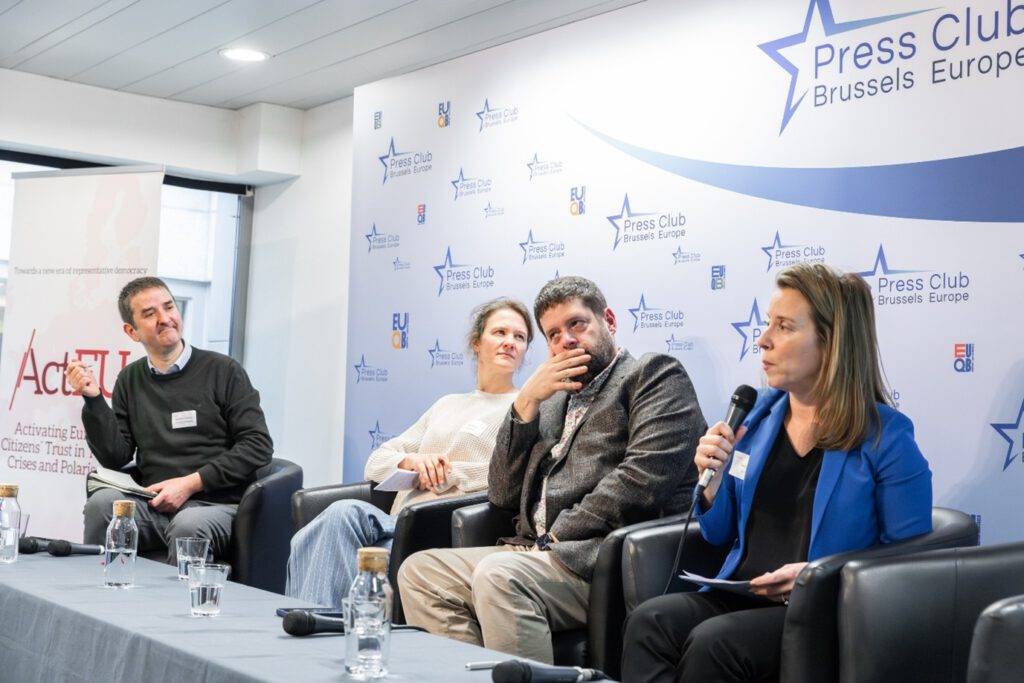
Anthony Zacharzewski (Democratic Society) argued that democracy is experienced through multiple layers: citizens’ deliberative capacity remains strong, but trust in governments, institutions and information ecosystems is more fragile. He pointed to a growing number of deliberative initiatives such as citizens’ assemblies taking place across Europe, nevertheless, due to their limited scale, they have not been representative. Therefore, it is essential to bring a wider group of people in these democratic conversations by building broader participation tools, including participatory budgeting among others.
Taken this, more structural efforts are required; along with reclaiming the internet it is imperative to reclaim a social conversation. In this regard, he emphasised a pertinent challenge – disagreement over basic facts and the concept of truth itself – which undermines democratic dialogue more fundamentally. Rebuilding trust thus requires restoration of shared informational foundations along with institutional reform, as well as in-person interactions. Lastly, Zacharzewski stressed that democratic institutions must be responsive and demonstrate effectiveness. Reliable public services and credible responses to citizens’ most acute concerns are central to democratic legitimacy, as it gives people a sense of agency to make changes in their lives.
Valerie Frey (OECD Directorate for Public Governance) presented comparative findings from the OECD Trust Survey (run biennially since 2021). Across participating countries, roughly 4 in 10 respondents report trusting their national government, with similar proportions expressing distrust; overall levels appear relatively stable across early survey waves. The data point to key trust drivers: confidence in governments’ capacity to address complex long-term challenges, perceptions that decisions are made in the public interest, and whether citizens feel they have a meaningful voice beyond elections. Participation rates in consultations and other forms of engagement remain modest, reinforcing perceptions of distance and limited responsiveness. Frey noted that low trust can function as democratic feedback, but only if institutions respond.
The Q&A of the panel revolved around a number of essential questions on trust and representation. Audience members put forth the issues of involving more people in decision-making (e.g., public administration or political parties); breaking through algorithms and echo chambers that deepen polarisation and finding realistic ways for reclaiming the internet. The panellists, as a response, touched upon the importance of designing participation that is rooted in real civic networks; when bottom-up engagement matches with top-down institutional responsibility to defend the spaces for debate, and ensure the delivery of effective public services. Speakers also underlined the need for regulations on the EU level and the necessity for building better tools in order to tackle the isolating effects of echo chambers and algorithms on social media.
The session concluded with the second round of polling, where the audience members were asked the same questions as they did in the beginning of the session. The results showcased the decrease in trust in governments, which the speakers assessed as not inherently problematic, highlighting that a critical outlook on the performance of the governments/institutions is also a healthy feature of democracies.
Session 2: “Us” vs. “them”? Culture wars and polarisation in our everyday life?
The second session was moderated by Méabh Mc Mahon (Euronews) and it explored the drivers and consequences of growing polarisation across Europe. She started the discussion by framing the topic within the broader debate on democratic resilience. She highlighted the role of media and political actors in shaping these dynamics, as the public sphere has increasingly become polarised, both online and offline, and Zoe Lefkofridi (University of Salzburg) opened the discussion with insights from ActEU’s research on gender equality and democracy. She highlighted that while younger generations tend to express more egalitarian values overall, support for specific policies, such as gender quotas or redistributive care, varies significantly. In particular, younger men tend to be less supportive, which reflects a broader dynamic where perceptions of fairness and representation matter as much as objective inequalities. She highlighted that feelings of exclusion, whether grounded in lived experience or political narratives, can play a central role in fuelling resentment and democratic dissatisfaction. She also stressed the responsibility of political elites in amplifying divides, as identity-based issues have become more salient in electoral competition. At the same time, polarisation should not be oversimplified as solely driven by the far right – mainstream actors also shape and normalise it. Ultimately, she underlined that democratic resilience depends on addressing both structural inequalities and the narratives that transform policy disagreements into identity-based antagonism.
Meera Selva (Internews Europe) focused on the role of media within polarised democracies. As polarisation can grow when communities feel ignored or misrepresented, journalists have an important responsibility in reporting inclusively and accurately. However, she stressed that journalism now operates within increasingly constrained environments, such as financial pressures, job cuts, concentrated media ownership and political attacks on press freedom. At the same time, digital platforms have transformed the information ecosystem. Algorithms privilege emotional and sensational content, which can amplify divisive narratives and reinforce identity-based conflicts.
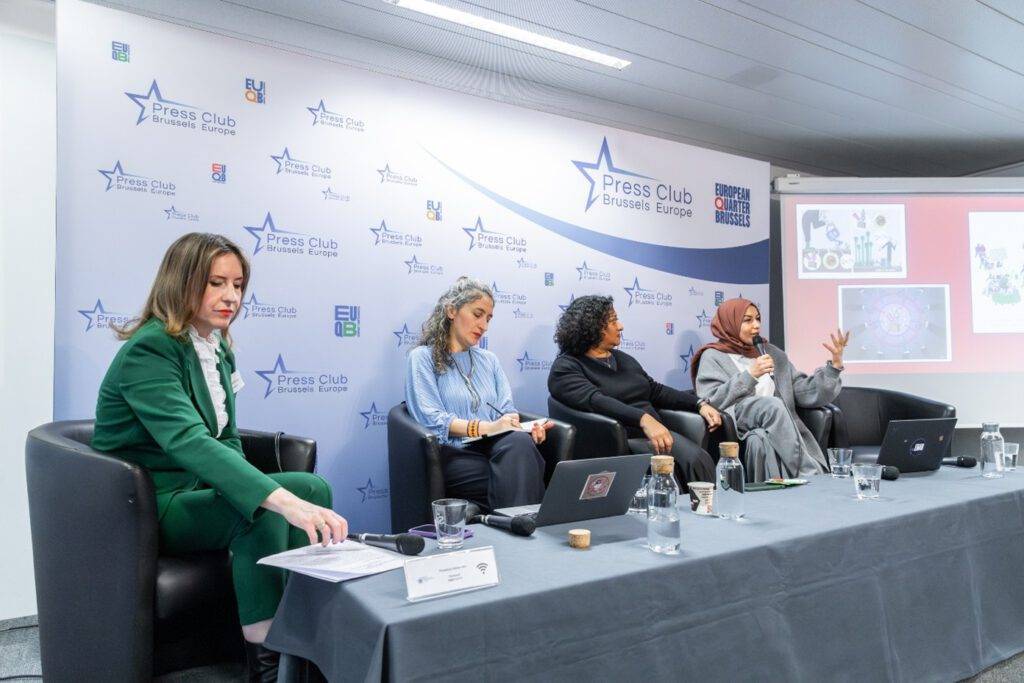
However, while EU-level platforms regulation represents progress, she cautioned that regulation alone cannot resolve the structural drivers of polarisation. Media literacy, transparency in ownership, and greater diversity within newsrooms are equally important for (re)building shared informational spaces.
Nourhene Mahmoudi (European Network Against Racism) shifted the focus to structural racism and power. She challenged the framing of “culture wars” as merely ideological disputes, explaining instead that they reflect long-standing struggles over community belonging and access to resources. In her opinion, current debates on migration and integration cannot be separated from Europe’s colonial history and the structural inequalities persisting today. She also warned of a shrinking civic space across Europe, where non-governmental organisations working on anti-racism face funding restrictions, legal proceedings and political scrutiny.
Audience interventions further expanded the discussion, raising concerns about intolerance across the political spectrum, the impact of media ownership structures, and the balance between free speech and regulation. Panellists agreed that while polarisation is not entirely new, its current intensity is shaped by the interaction of political strategy, digital infrastructures and unresolved structural inequalities. Democracy can tolerate disagreement, they noted, but it struggles when divisions are deliberately deepened and institutional trust erodes.
The session concluded with a shared recognition that addressing polarisation requires action at multiple levels: responsible political leadership, resilient and independent media systems, effective regulation of digital platforms, protection of civic space, and sustained investment in education and media literacy. Rather than viewing division as inevitable, the panel underscored the need to confront its structural roots and reaffirm democratic inclusion as a guiding principle for Europe’s future.
Session 3: Who gets heard? Making voices count in European democraciesyday life?
Moderated by Shada Islam (New Horizons Project), the third session turned to the question: who actually gets heard in European democracies today? Situating the debate within broader concerns about declining trust, political disengagement and democratic fatigue, she invited the panel to move beyond turnout statistics and confront the deeper issue of responsiveness. If citizens are detached and distrustful, is it because democracy is failing to include them?
Eftichia Teperoglou (Aristotle University of Thessaloniki) opened the discussion with insights from the ActEU project, stressing that democratic exclusion is about many different problems. While some progress has been made in representation, for instance through gender quotas, participation gaps remain important along socio-economic and educational lines. Citizens with lower income and lower levels of education participate less and feel less represented. The deeper problem, she argued, is political efficacy. Focus groups conducted in ActEU showed that many citizens do not believe that participation would change policy outcomes. Whether distrust is a cause or a consequence of exclusion remains unresolved, but the two are clearly intertwined.
Manuel Müller (Finland Institute of International Affairs & ActEU Scientific Advisor) shifted the focus to the structure of EU democracy itself. One of democracy’s strengths, he noted, is that it works not only for politically engaged citizens but also for those who engage intermittently (typically during elections). At the national level, electoral competition offers relatively clear narratives and visible alternation of power. At the EU level, however, governance is complex, consensus-driven and often technocratic. Elections matter, but they rarely feel decisive. For citizens who are not closely following policy processes, this weakens the sense that their vote has a tangible impact. The inclusion gap, therefore, is also institutional. On the question of further diversifying inclusion, he suggested that universal public services may offer a way forward.
Igor Miškulin (European Parliament) continued with a more optimistic remark. Turnout in European elections has increased in recent years, suggesting that when citizens perceive higher stakes, they mobilise. Nevertheless, participation trends should not obscure persistent inequalities in representation, including gender imbalances across Member States and the underrepresentation of certain social groups. He also reminded the audience that democracy is not permanent by default. History and contemporary trends in the world show that democratic standards can erode, including within Europe itself. He further underlined that participation generates expectations. If institutions invite input but fail to act on it, distrust intensifies. This means that democratic innovation without responsiveness may inadvertently reinforce alienation.
Catarina Faria (Party of European Socialists) focused her insights on meaningful participation. The core issue, she argued, is not simply how many people participate, but who is able to participate meaningfully. Democracy continues to function better for some groups than for others. Reflecting on Portugal’s experience during the Conference on the Future of Europe, she noted that public trust increased when citizens saw concrete follow-up to participatory processes. The problem is, therefore, once again, inclusion without delivery. At the same time, she stressed that communication remains a structural barrier. If citizens cannot understand what is being decided or by whom, participation becomes more challenging.
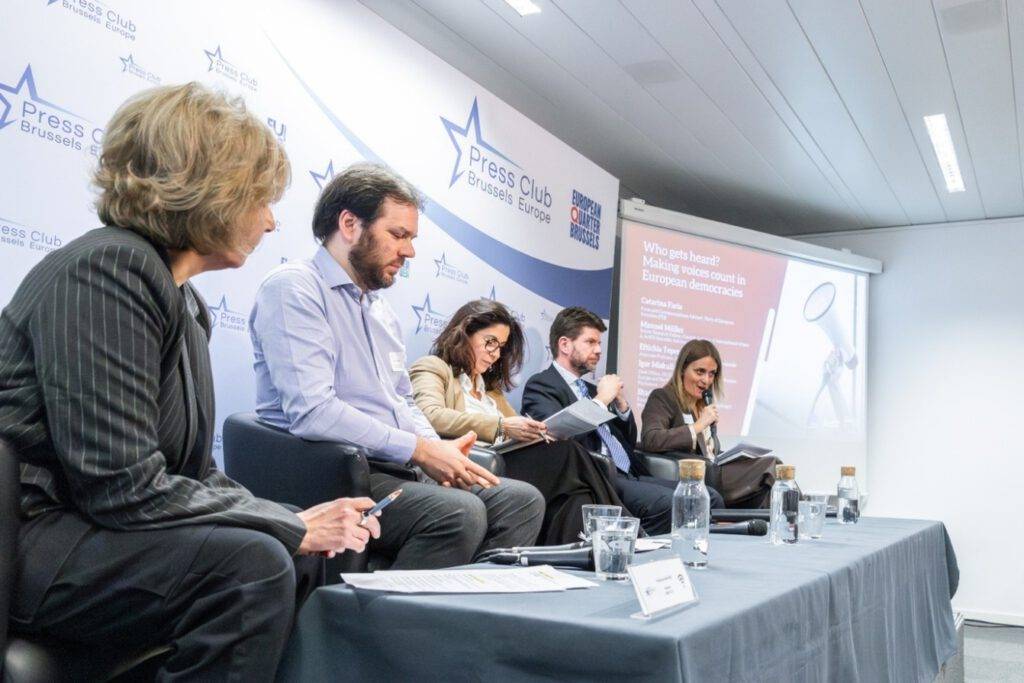
On the tension between diversifying inclusion without facing backlash, she argued that resistance often stems from insufficient explanation. Policies must be framed as advancing the common good rather than redistributing benefits along a perceived zero-sum game.
Session 4: “From protests to power - Participation, repression and the defence of democracy”
The final panel of the conference, moderated by Louisa Parks (University of Trento), explored the role of protest as a necessary form of political participation in democratic life. Framing the discussion in light of growing repression of collective action across Europe and beyond, she emphasised that protest is a foundational component of democratic systems. The panel addressed how protest translates into political impact, how institutions mediate citizen claims, and what participation means in contexts of democratic backsliding and repression.
Maija Setälä (University of Turku & ActEU Scientific Advisor) reflected on the relationship between protest, democratic innovation and institutional impact. She highlighted how activism can reshape public discourse, reframe issues and influence societal attitudes over time. Beyond these indirect effects, she stressed the importance of institutional channels that translate citizen demands into political decision-making. Drawing on her research on the Finnish Citizens’ Initiative, she explained how agenda-setting mechanisms can enable citizens to bring issues directly to parliament, with tangible legislative effects. However, she warned that participatory instruments risk becoming symbolic if policymakers fail to respond meaningfully. For democratic innovations to matter, they must be properly designed, transparent and embedded in procedures that ensure responsiveness. While distrust may sometimes be justified, she argued that strengthening institutional pathways for participation remains essential.
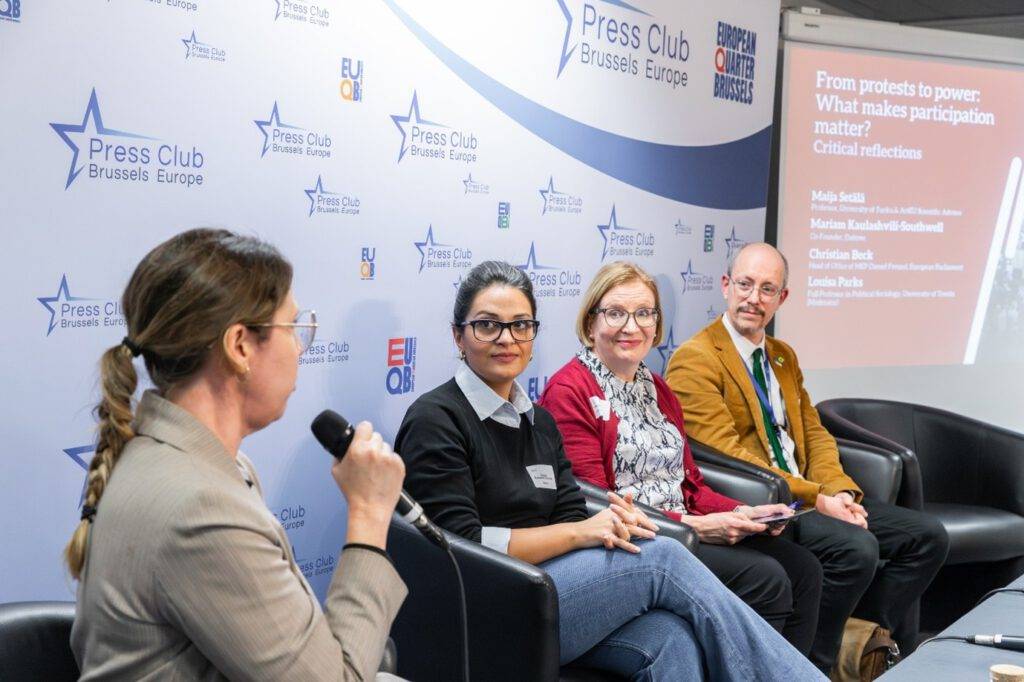
Mariam Kaulashvili-Southwell (Daitove) provided a powerful account of protest under conditions of repression. Reflecting on Georgia’s political trajectory since independence, she described how democratic gains following the 2003 revolution and the first peaceful electoral transfer of power in 2013 were gradually taken for granted. Failure to contest early signs of democratic erosion, she argued, allowed a pro-Russian authoritarian government to consolidate power. Georgia is currently experiencing over 400 consecutive days of protest, with more than 200 political prisoners and increasingly restrictive laws criminalising peaceful assembly, foreign funding and dissent.
She detailed the financial penalties, surveillance technologies and judicial risks used to deter participation, as well as the emotional toll of sustaining such mobilisation. Participation, she argued, is not limited to elections but requires continuous engagement. In contexts of repression, protest becomes both a defence of sovereignty and an affirmation of identity. She underscored the importance of international solidarity, noting that even symbolic sanctions or public statements from European actors provide moral support to protesters who often feel isolated. While cases brought before the European Court of Human Rights have been won against Georgia, she stressed that such victories are bittersweet, reflecting systemic democratic decline rather than success.
Christian Beck (European Parliament) addressed the relationship between grassroots mobilisation and European-level policymaking. He noted that many Green Members of the European Parliament emerged directly from protest movements, particularly climate activism. The mobilisation around climate change, inspired in part by Greta Thunberg’s school strikes, helped create the political conditions for the European Green Deal. However, he warned that civil society organisations face increasing attacks and funding restrictions, particularly from right-wing actors portraying them as illegitimate or politically biased. In Brussels, where thousands of lobbyists represent corporate interests, civil society groups often lack equivalent resources to navigate complex and opaque legislative processes. He highlighted the problem of transparency in EU decision-making, particularly in informal negotiations (trilogues), where preparatory documents are often not proactively published despite legal obligations. He cautioned that restricting funding risks weakening civil society, an approach mirrored in countries such as Hungary and Georgia. At the same time, he offered a cautious note of optimism, referencing large-scale mobilisations in Hungary as evidence that public resistance can regain momentum.
The session concluded with audience interventions and across the discussion, several common themes emerged. Protest and institutions are not opposites but historically intertwined; democratic innovations require both bottom-up pressure and responsive political structures. Distrust is not always a symptom of misunderstanding but can be grounded in lived experiences of exclusion or repression. In increasingly restrictive environments, participation carries significant personal, financial and emotional costs, yet remains central to the protection of democratic life. The panel closed with a call to remain vigilant, to sustain transnational solidarity, and to recognise protest not as disruption, but as a vital democratic practice.
Concluding remarks
ActEU Scientific Lead Daniela Braun (Saarland University) concluded the conference by reflecting on the project’s central questions: whether democracy can still be trusted, how polarisation and cultural conflicts affect democratic systems, and how democracy can be strengthened. She emphasised that political trust is complex and varies across governance levels, and that understanding it requires looking beyond simple survey measures to include participation and perceptions of responsiveness. She highlighted ActEU’s key policy recommendations, including stronger safeguards for fundamental rights, greater oversight of democratic standards at all governance levels, and enhanced support for participatory and democratic innovation mechanisms.
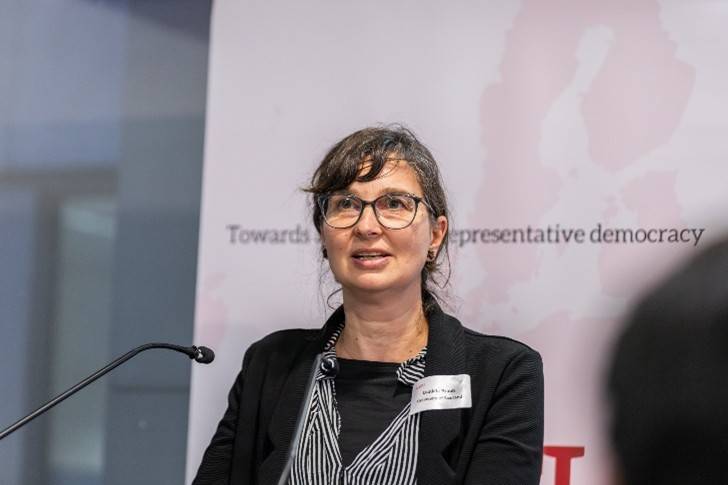
She stressed that coordinated action across political levels is essential to avoid blame-shifting and reinforce legitimacy in the EU’s multilevel system. She also underlined the project’s outreach efforts, such as policy briefs, educational toolkits, youth initiatives and explanatory videos, designed to make research accessible beyond academia. Concluding with thanks to the consortium partners, organisers and the European Commission, she expressed hope that the collaboration and dialogue initiated through ActEU will continue beyond the project’s formal end.
ActEU Mid-Term Conference 12 Decembre 2024, Brussels
Strengthen Democracy – Building trust and tackling polarisation in Europe
On 12 and 13 December, the Mid-Term Conference of the ActEU project took place in Brussels under the guiding theme ‘Building trust and tackling polarisation in Europe’ at the Trans European Policy Studies Association (TEPSA). This has initiated the second phase of our project. The conference was complemented by a workshop with the Civil Society Network, in which civil society actors from all over Europe took part. The focus was on the exchange between science and practice: in addition to the presentation and discussion of our initial research results, exciting progress towards the development of toolkits for political actors as well as the education sector was made.
The conference focused on strengthening democracy in Europe, in particular on building trust and overcoming polarisation. In four sessions, initial project results, challenges of representative democracy, factors for trust and engagement as well as the effects of polarisation on democratic norms were discussed.
The following day’s workshop with the Civil Society Network from across Europe focussed on the development of toolkits for schools, civil society and political actors based on our research findings. Democracy labs were emphasised as a key format for actively involving young people in democratic discussions and supporting ongoing project activities. The project team from Duisburg presented the format of the democracy labs as well as initial results from Germany and Slovenia, which the team from the Chair of European Integration and European Politics has been executed in recent weeks.
We would like to thank TEPSA for organising this event, all the participants for joining us in Brussels and taking part in the conference and the CSN-Workshop. We are looking forward to all further activities of the project!
See the agenda of the mid-term conference or visit for more information the website of TEPSA here.


ActEU Kick Off Meeting 28th March 2023, Brussels |
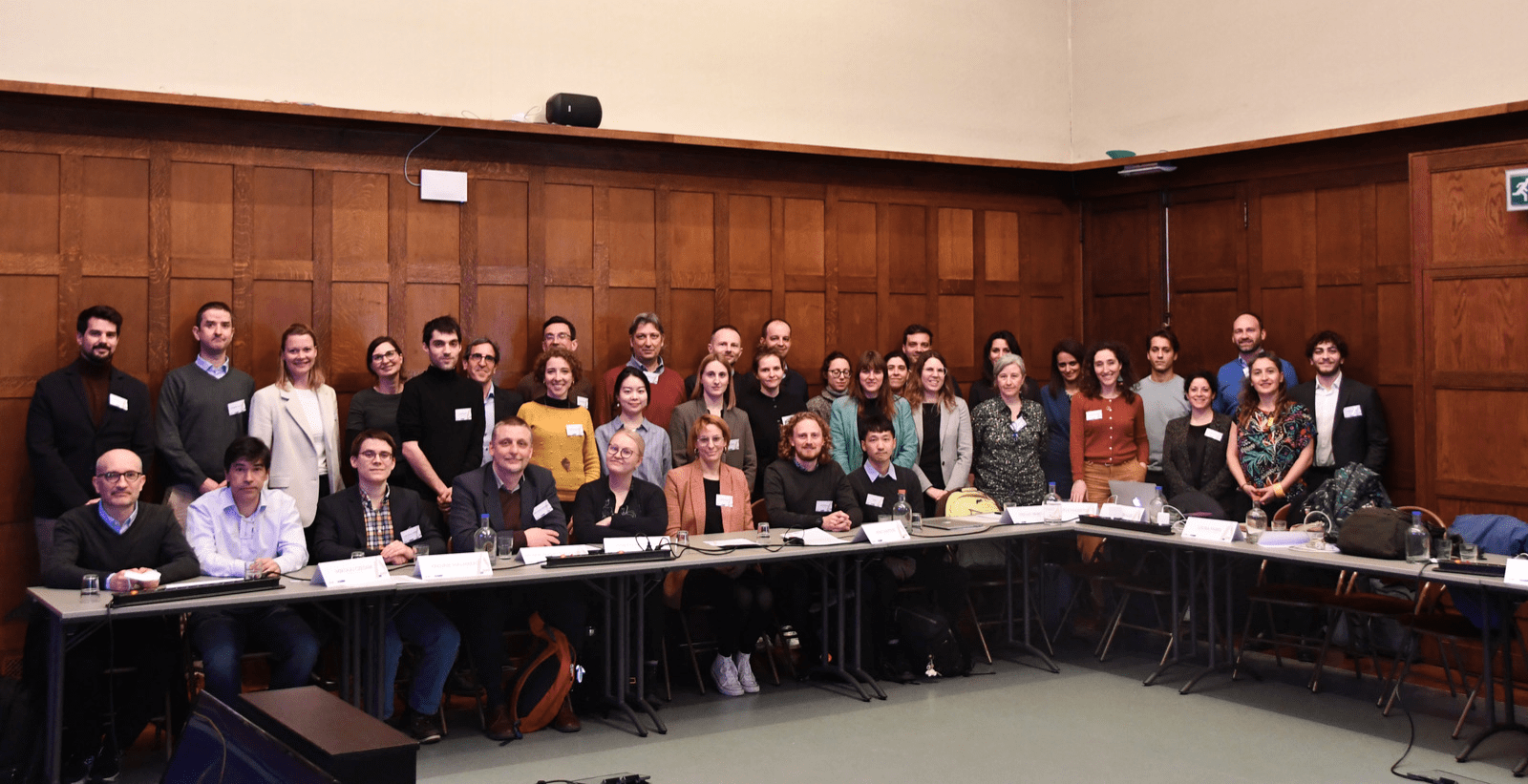
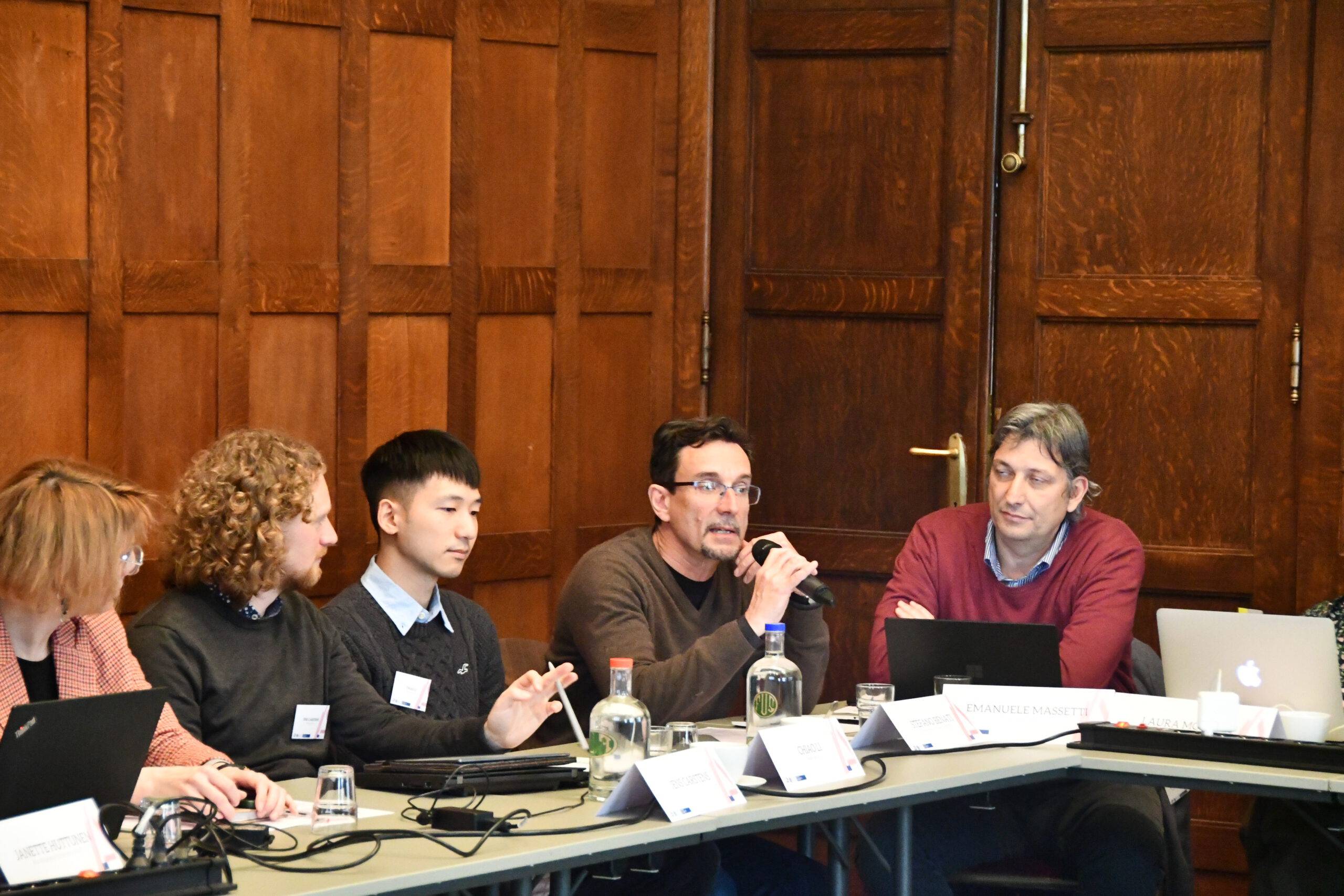
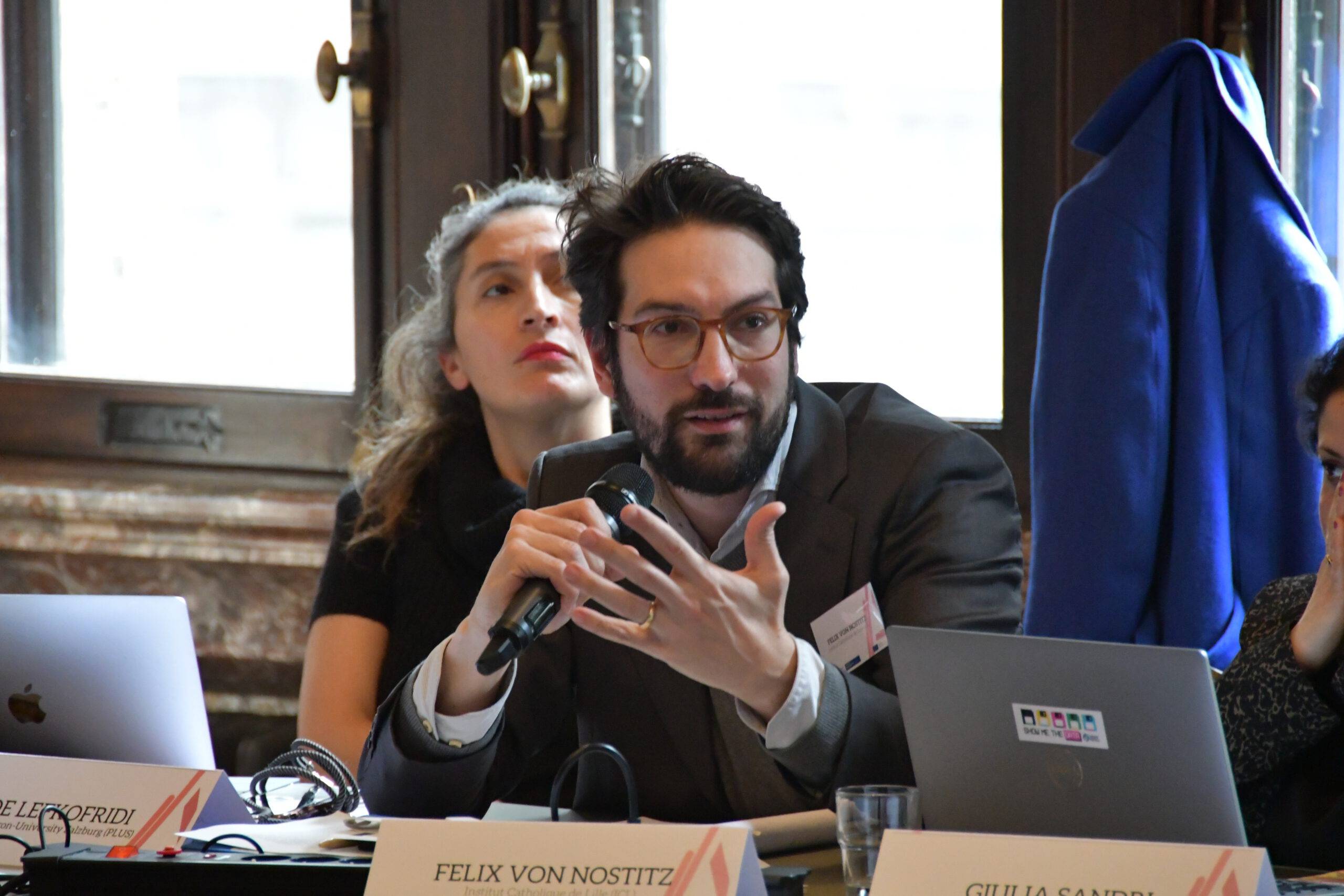
The first meeting of all ACTEU partners took place on 28th March in the premises of Fondation Universitaire! TEPSA organized the internal meeting, where organizational topics as well as first content-related topics were discussed.
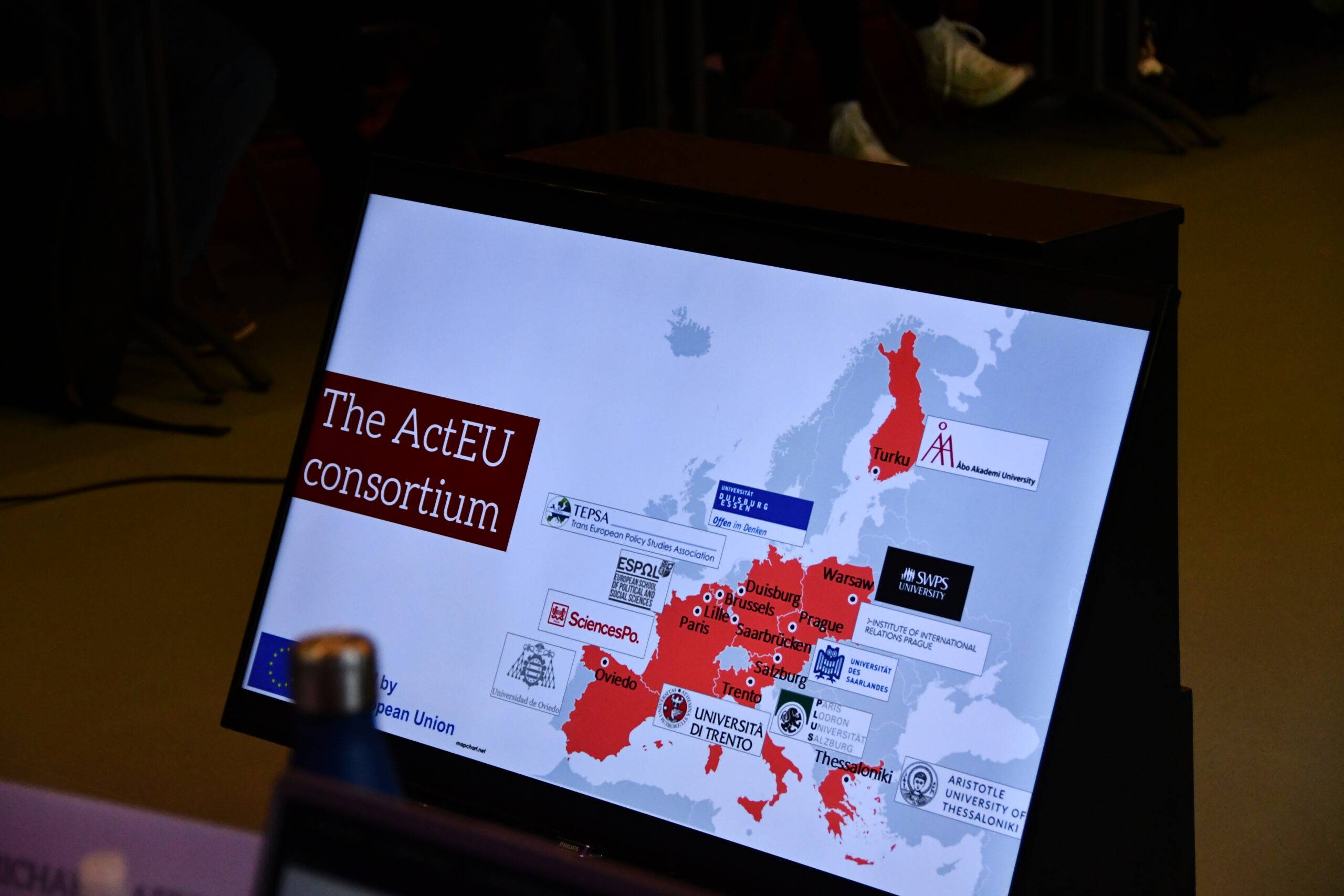
The kick-off was opened by Michael Kaeding (University Duisburg-Essen/coordinator) and Daniela Braun (University Saarland, scientific lead) with welcoming words. After remarks by Julie Baleriaux (Policy Officer at the European Commission) and Paloma Martin (Project Advisor at the Research Executive Agency at the European Commission) all relevant organizational matters and administrative issues were discussed (Liesa Döpcke, University Duisburg-Essen). Together, the most relevant aspects of ActEU were reiterated: What are the key objectives? What are the milestones and deliverables for the first year? (Michael Kaeding, University Duisburg-Essen)
In the second part of the day, the focus was on the contents of WP 1 ‘Providing an infrastructure to assess the decline of political trust and legitimacy’ and the question ‚How do we plan to collect, integrate and apply the ActEU multi-methods approach?‘ (Alex Hartland & Daniela Braun, University Saarland). An overview of the research design of the focus group (Kristina Weissenbach), the public opinion survey (Ann-Kathrin Reinl University Gent) and web-scraping (Daniel Gayo-Avello, Universidad de Oviedo) was given. Afterwards all members of the consortium gave their input to improve the design.
It was a pleasure to welcome all consortiums members in Brussels and we are looking forward to the first steps of the project!
You can read the event’s agenda here.





For more information and news follow our hashtag #ActEU on facebook and Instagram